The federal rule that governs your studio is OSHA's respirable crystalline silica standard for general industry, 29 CFR 1910.1053. It sets a permissible exposure limit of 50 micrograms per cubic meter of air as an eight hour time weighted average, and an action level of 25 micrograms that triggers monitoring and medical surveillance obligations. It applies to your employees, not to your members, and that distinction shapes almost everything about how you comply.
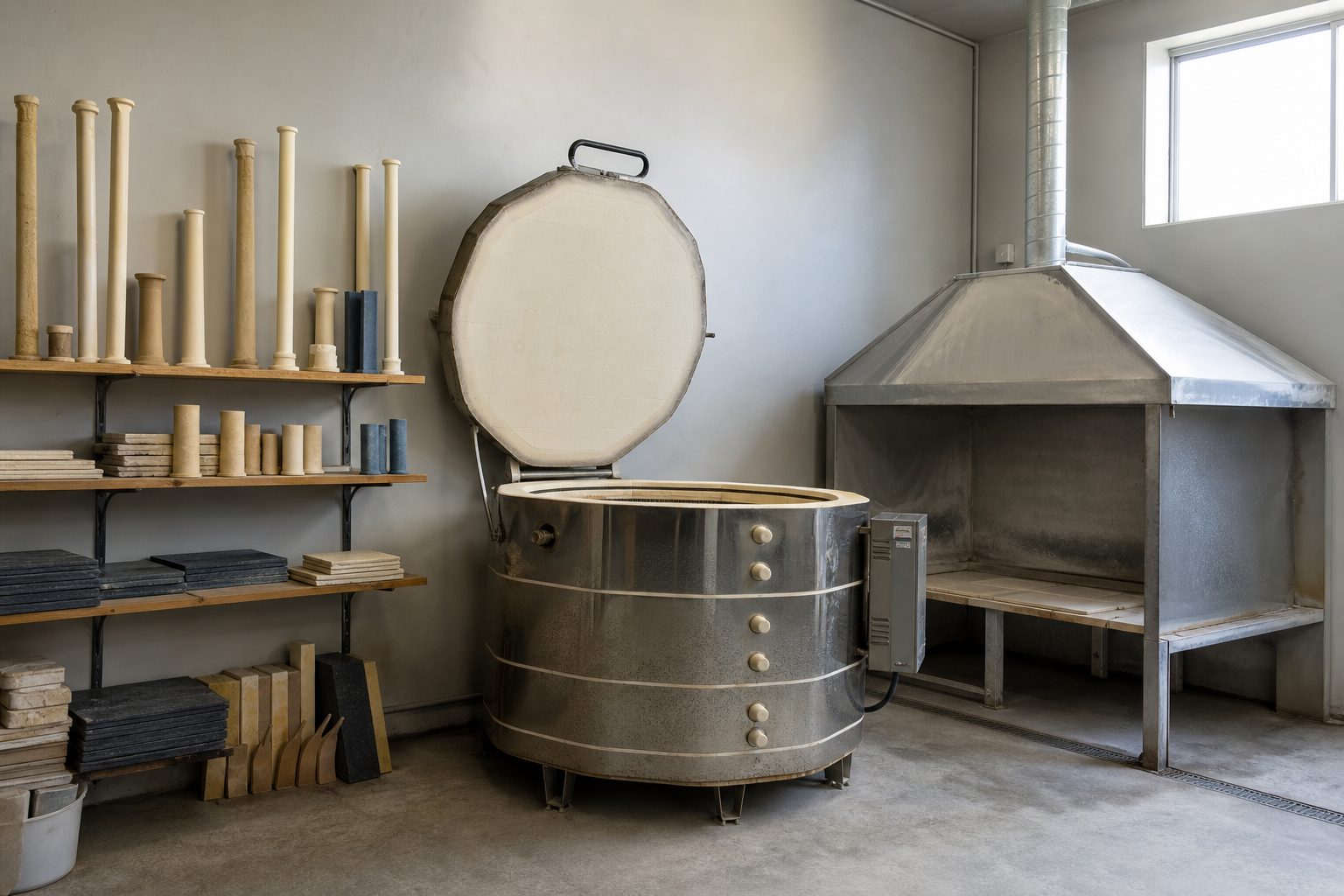
Your local building and fire code, by contrast, will have nothing to say about silica specifically. What it will care about is occupancy classification, ventilation rates, the kiln room and combustible storage. Those are lease questions, and they come up before you ever open.
What follows is what the rule actually asks of a teaching studio, in the order you would tackle it.
Where silica comes from in a clay studio, step by step
Crystalline silica in a clay studio is quartz, and it is present in nearly every dry material you handle. The hazard is not the material sitting in the bag. It is the respirable fraction, particles small enough to reach deep lung tissue, and those get generated by specific, identifiable acts.
- Opening and scooping dry glaze materials, especially silica, feldspar, ball clay and kaolin
- Mixing glaze from powder without local exhaust or a mixing hood
- Sanding or grinding bisque or greenware dry
- Sweeping dried trimmings and slop from the floor
- Reclaiming clay by breaking up bone dry scrap
- Grinding glaze drips off pot feet with a bench grinder or diamond pad
- Dry brushing shelves and applying kiln wash to hot shelves
Notice that throwing on the wheel is not on the list. Wet work is not the exposure. Everything on that list is dry handling of a fine powder, and that is where your controls belong.
Keep reading: Should I fire cone six electric or invest in a gas reduction kiln for my studio?
What the OSHA general industry silica standard covers
1910.1053 has been in force for general industry since June 2018. It is not a construction standard, so the Table 1 of specified control methods that contractors rely on does not apply to you. You are on the performance side of the rule, which means you must actually assess exposure rather than follow a menu.
The obligations break into six pieces: exposure assessment, control of exposure through engineering and work practices, respiratory protection where controls are not enough, housekeeping restrictions, medical surveillance, and a written exposure control plan with recordkeeping. Hazard communication under 1910.1200 sits alongside it, which means safety data sheets for every dry material and training that names silicosis and lung cancer as the hazards.
One thing worth being clear eyed about: a small studio with a couple of part time techs is not a high enforcement target. That is not a reason to skip the written plan. The plan is what protects your staff and what you produce in five minutes if an inspector, an insurer or an injured employee's attorney ever asks.
Exposure assessment and when monitoring is triggered
You have two routes. The performance option lets you rely on any combination of air monitoring data or objective data sufficient to accurately characterize employee exposure. The scheduled monitoring option is the more defensible one for a studio, because it produces paper.
Under scheduled monitoring you take initial personal air samples on employees reasonably expected to have the highest exposures, typically the tech who mixes glaze and the person who reclaims clay. What you do next depends entirely on the result:
| Initial result | What the rule then requires |
|---|---|
| Below the action level, 25 µg/m³ | Monitoring may be discontinued |
| At or above action level, at or below the PEL | Repeat monitoring within six months |
| Above the PEL, 50 µg/m³ | Repeat monitoring within three months |
Two consecutive results taken seven or more days apart that fall below the action level allow you to stop. Any change in production, process, control equipment or personnel that could reasonably increase exposure restarts the assessment. Swapping a glaze mixing setup or adding a reclaim operation counts.
An industrial hygienist sampling day for two employees is a real cost, typically in the high hundreds to low thousands of dollars including lab analysis. Budget it once, in your opening year, and treat the result as the baseline you build the rest of the program on.
Wet methods, HEPA vacuums and why brooms are the problem
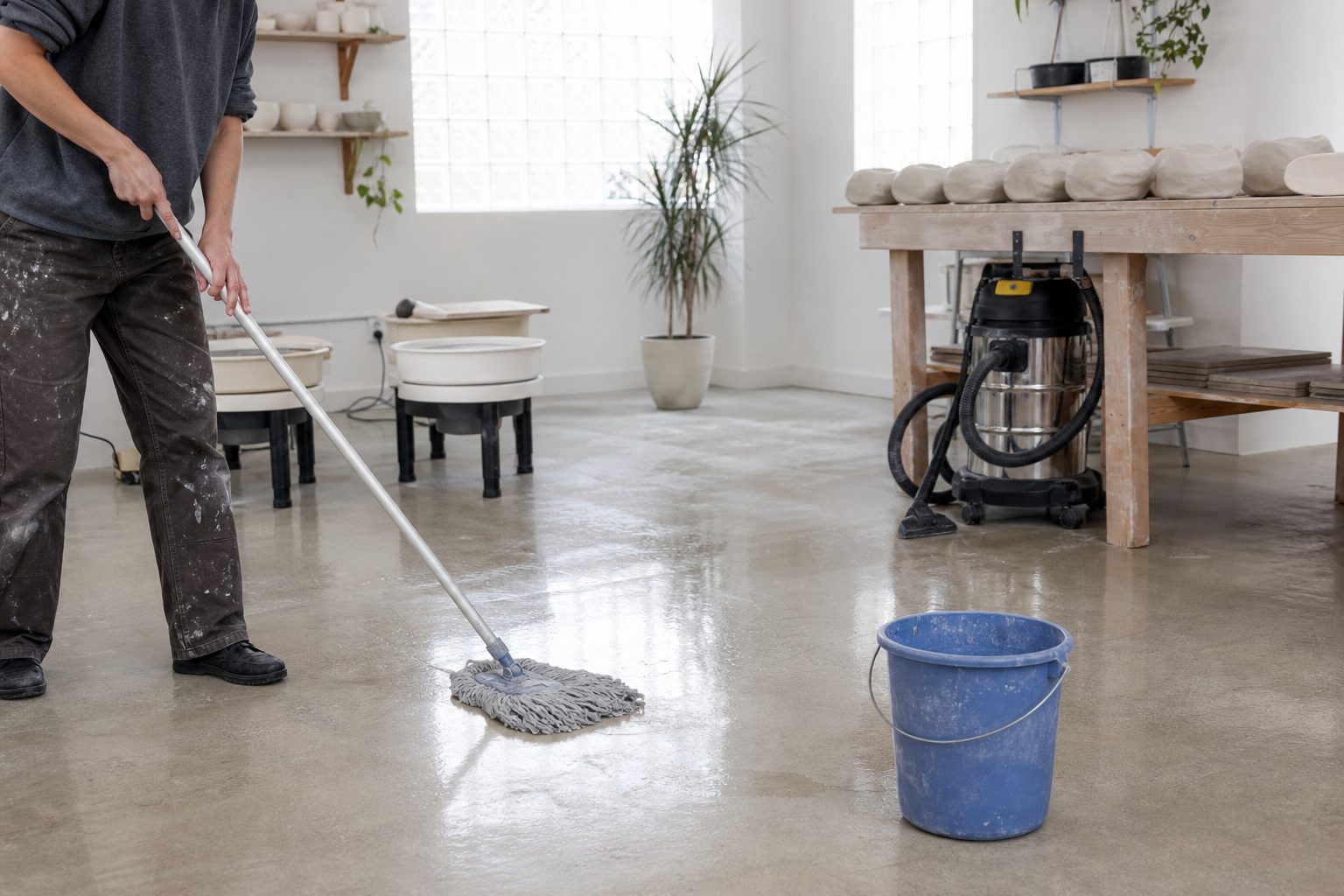
The housekeeping provision is the sharpest teeth in the rule for a studio. It prohibits dry sweeping and dry brushing where that could contribute to employee exposure, unless wet sweeping, HEPA filtered vacuuming or another equally effective method is not feasible. It likewise prohibits using compressed air to clean clothing or surfaces unless the air is used with a ventilation system that captures the dust, or no alternative method is feasible.
In practice that means the broom leaves the studio. Replace it with a wet mop on a two bucket system and a vacuum with a genuine HEPA filter and sealed housing. A shop vacuum with a fine dust bag is not a HEPA vacuum and will exhaust the respirable fraction straight back into the room.
Engineering controls that pay for themselves in a small studio, roughly in order of value:
- A downdraft or slot hood over the glaze mixing bench
- Wet grinding for pot feet, or a grinder with local exhaust
- A dedicated damp reclaim system so scrap never goes bone dry
- Smooth, sealed, coved flooring that mops clean
- Sink traps sized so nobody is scraping dried sludge
Respirators come last, after controls, and that ordering is written into the rule.
Keep reading: Why do my members keep losing work in the bisque queue, and how do I fix it?
Respirators, fit testing and the written program
If you require respirator use, 1910.134 comes with it. That means a written respiratory protection program, a medical evaluation questionnaire reviewed by a licensed health care professional before an employee wears a tight fitting respirator, fit testing before first use and at least annually after that, and training on use, limitations and maintenance.
Voluntary use of a filtering facepiece changes the picture: if an employee chooses to wear an N95 and exposures are below the limits, you provide them with the Appendix D information and you are not obliged to run the full program for that use. Get advice on which situation you are in before you buy a box of respirators, because handing them out casually can pull you into obligations you did not intend.
The written exposure control plan under 1910.1053 is separate and short. It describes the tasks that generate silica, the controls and work practices used for each, the housekeeping procedures, and the restricted access arrangements. Review it at least annually and date the review.
Housekeeping rules that apply to members, not just staff
Here is the honest limit of the federal rule: OSHA regulates employers and employees. Your members are not employees, so the standard does not reach them directly. Your general duty to your staff does, and a member sweeping a studio floor creates an exposure your techs breathe.
So the member rules are yours to write and enforce, and they should be part of the membership agreement rather than a sign nobody reads. A workable set:
- No dry sweeping by anyone, ever, including at closing
- Sand and grind wet, at the designated station only
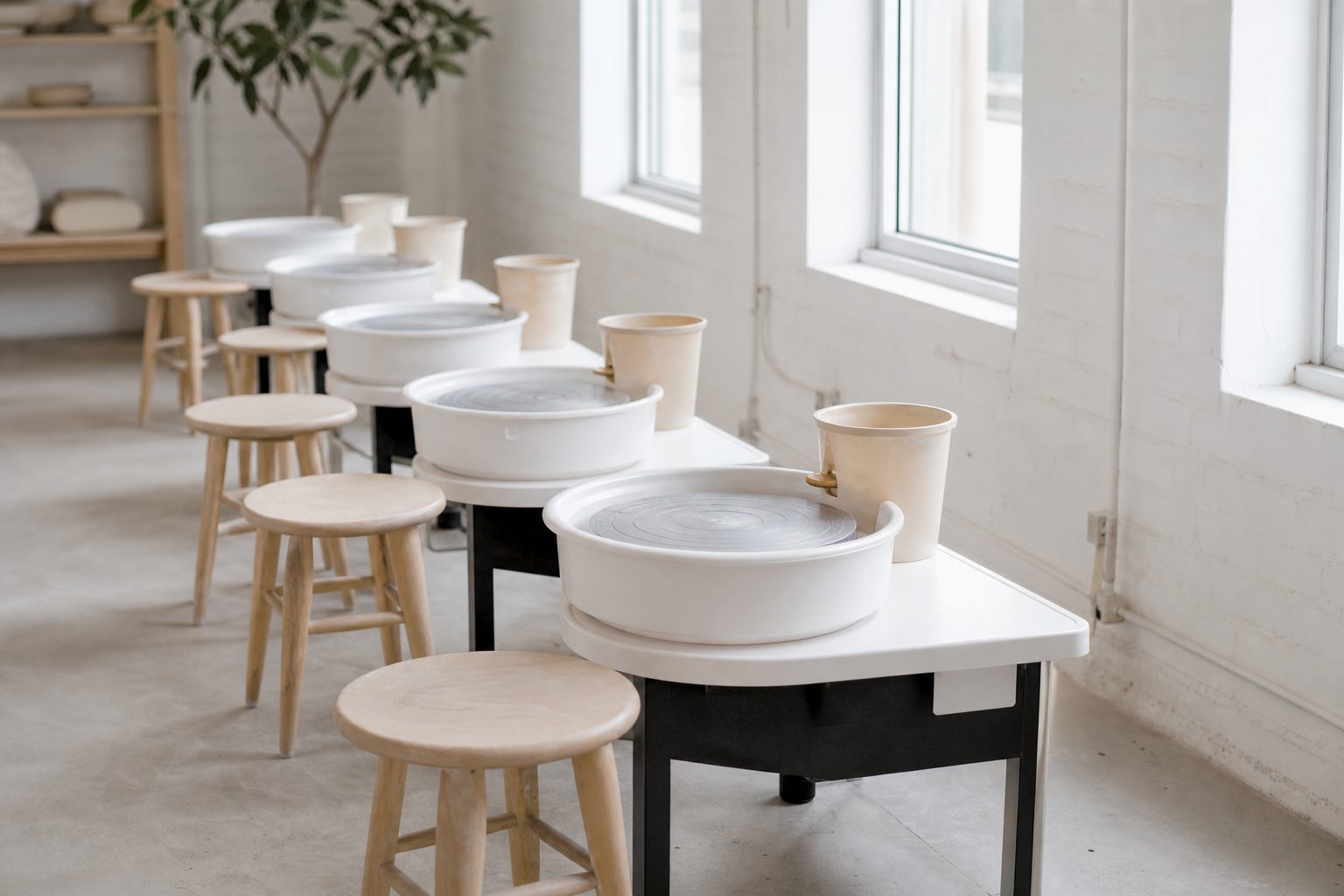
- Wipe down wheel, table and stool with a damp sponge before leaving
- No dry clay scrap in the trash, it goes to the reclaim bucket damp
- Street clothes and shoes stay out of the mixing room
- Glaze mixing from powder is staff only
That last rule is the one that changes your exposure profile most. Keep powder handling with trained staff at a hood, and the general studio becomes a wet operation.
See how KilnSeat handles this for pottery and ceramics studios
Medical surveillance and recordkeeping obligations
You must offer medical surveillance at no cost to any employee who will be occupationally exposed to respirable crystalline silica at or above the action level for 30 or more days a year. The initial exam includes a medical and work history, a physical exam of the respiratory system, a chest X ray read by a certified B Reader, a pulmonary function test, and a tuberculosis test, with periodic exams at least every three years.
You keep the air monitoring records, objective data, and medical surveillance records, and medical records are kept confidential and for the duration of employment plus 30 years under 1910.1020. If most of your firing and cleaning work is wet and your glaze mixing is hooded, your sampling may put you below the action level and this section may not apply. You will not know without the sampling.
Fire and building code questions to ask before signing a lease
Silica is a health rule. The lease conversation is a code conversation, and these are the questions worth asking the landlord and the local building department before you commit:
- What occupancy classification does the space carry, and does a kiln room change it
- What electrical service is available at the panel for kiln circuits
- Is a kiln vent to the exterior permitted through the wall or roof, and who approves the penetration
- What are the clearance requirements around the kiln to combustible construction
- Is there a sprinkler head above the kiln location and what clearance does it need
- Does the sanitary district require a clay trap on your sinks, and who maintains it
- Does the lease permit floor loading for a full shelf wall of ware
Making it operational
A silica program lives or dies on whether the rules reach members at the moment they matter. A policy in a binder does nothing. Rules that appear when someone books a wheel session, agrees to the membership terms, or claims a shelf are rules people actually see.
KilnSeat holds your membership agreement, studio rules and booking in one flow, so the wet cleaning rule and the grinding station rule are attached to the booking rather than taped to a wall. Get the sampling done, write the plan, then put the member facing half of it where people will read it.