For a membership studio, electric at cone 6 is almost always the right first kiln, and often the right only kiln. It fires on a programmed schedule with no one watching, it installs with an electrician and a vent hood instead of a mechanical permit and a gas contractor, and it lets a part time tech run three loads a week without giving up an evening.
Gas reduction earns its keep in one situation: when the glaze surfaces your members come for cannot be made any other way, and when you have someone who will stand with the kiln for eight to twelve hours. Copper reds, shino, celadon and true tenmoku want an oxygen starved atmosphere. Cone 6 electric has come a long way, but it is a different palette, not the same palette by another route.
Below is what each choice actually demands, in the terms that decide it: glaze, install, cost per cubic foot, staff hours, wear parts, and who is willing to insure it.
What each kiln does to the glaze surface members want
An electric kiln fires in oxidation. Metal oxides stay fully oxidized, so copper reads green, iron reads amber to brown, and the palette runs bright, clean and repeatable. The last decade of cone 6 glaze development has produced satin mattes, floating blues and rich iron saturates that hold their own on a gallery shelf.
A gas kiln in reduction starves the atmosphere of oxygen, and the glaze and clay body pull oxygen out of their own metal oxides to compensate. Copper flips to red, iron in a celadon goes blue green, and the clay body itself flashes and speckles where iron in the stoneware reduces at the surface. Reduction also affects the body, not just the coat, which is why reduction work reads differently even in a plain liner glaze.
Ask your members what they are actually making. A studio full of functional mugs, planters and hand built work is well served by a strong cone 6 oxidation palette. A studio where half the members came from a university program and talk about shino is telling you something specific.
Keep reading: Why do my members keep losing work in the bisque queue, and how do I fix it?
Install reality: electrical service, gas line, venting and permits
Electric
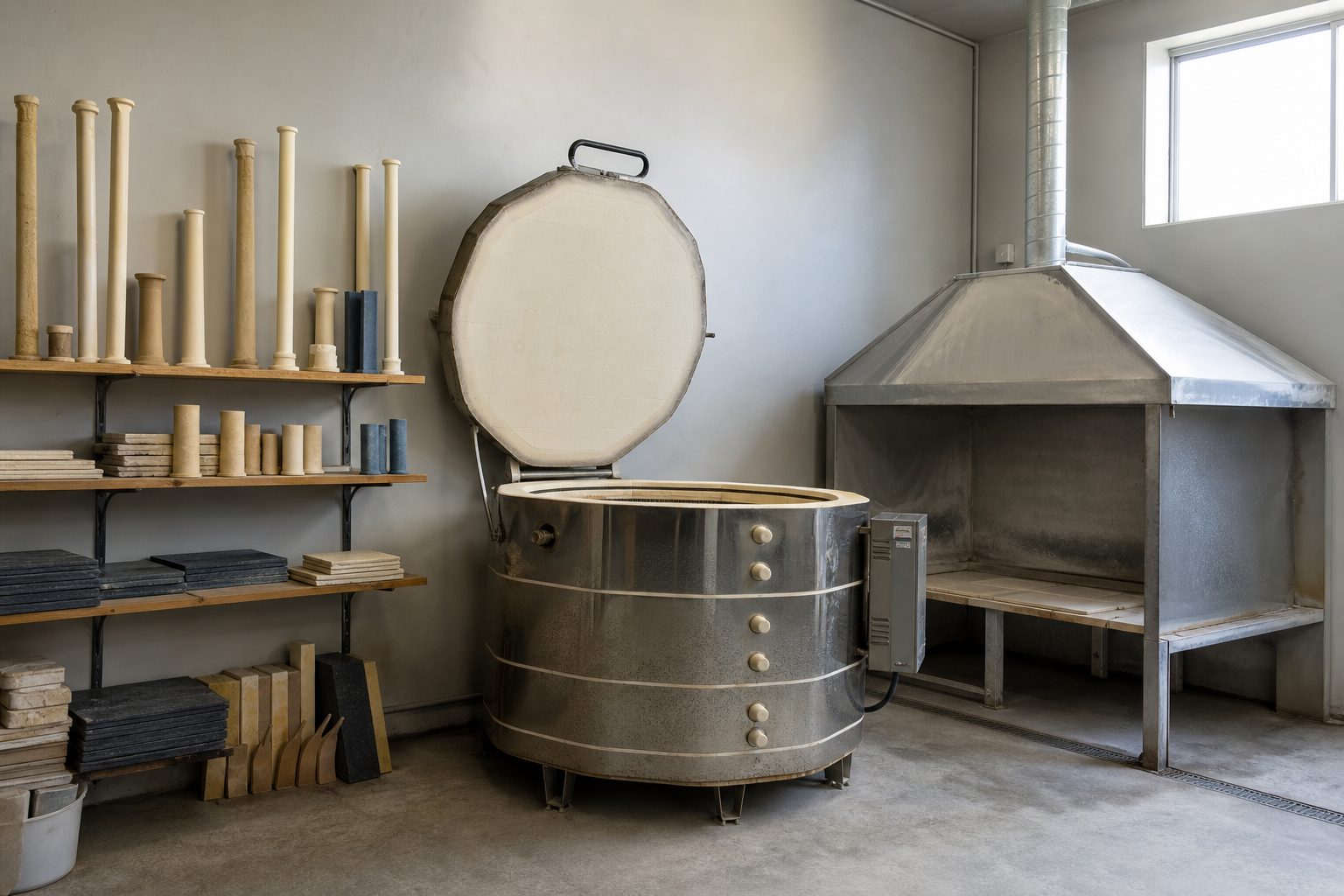
A seven cubic foot kiln at 48 amps, 240 volts single phase needs a 60 amp circuit and a disconnect within sight. Two of those kilns plus lighting, wheels, a pug mill and a compressor will push a 200 amp service, so the first call is to an electrician to read the panel. A downdraft vent kit ducted to the exterior handles the fumes and is not optional in an occupied room. Permit path: electrical permit, plus a mechanical permit for the duct penetration in many jurisdictions.
Gas
The list is longer and every item involves an inspector. A gas fired kiln needs an adequately sized supply line and meter, a listed or engineer reviewed burner system with safety shutoff, a hood and stack sized for the kiln with makeup air, combustion air supply to the room, clearance to combustibles, and often a dedicated fire rated kiln room. Installations are reviewed against NFPA 54, the national fuel gas code, and your local mechanical and fire codes. Expect a design professional, not just a contractor.
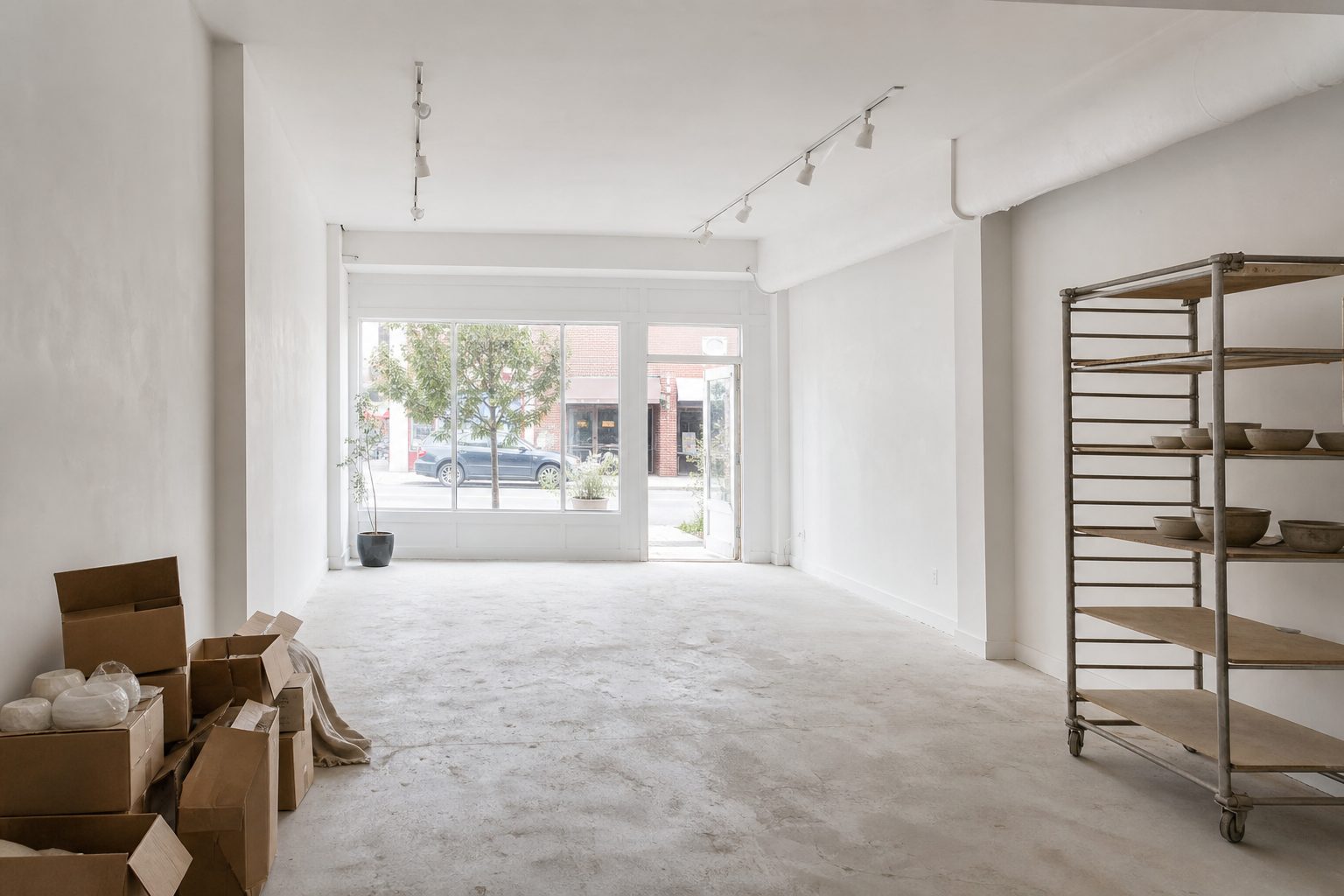
The practical consequence is that gas is very hard to add to a leased strip mall or upper floor space, and much easier in a standalone light industrial building you control. If your lease is five years in a multi tenant building, that constraint often makes the decision for you.
Cost per cubic foot fired, and how to calculate yours
Compare energy per cubic foot of usable stacking space, not per firing, since the kilns are rarely the same size.
Electric, seven cubic foot, cone 6 glaze. 11.5 kW connected load. Assume a nine hour firing at an average duty cycle of 60 percent, an assumption you should replace with a submeter reading. That gives about 62 kWh. At $0.16 per kWh, roughly $9.90 per firing, or about $1.41 per cubic foot.
Gas, 30 cubic foot downdraft, cone 10 reduction. Assume a burner system rated 360,000 BTU per hour running an average of 55 percent of a twelve hour firing. That is 360,000 multiplied by 12 multiplied by 0.55, about 2.38 million BTU, or roughly 23.8 therms. At $1.30 per therm, about $31 per firing, or about $1.03 per cubic foot.
Both figures rest on stated assumptions about duty cycle and rate, and both will move with your utility. The lesson is not that gas is cheaper. It is that fuel is the small number in both columns. The real cost difference is labor and wear parts, and those run the other way.
| Line item per firing | Electric, 7 cu ft | Gas, 30 cu ft |
|---|---|---|
| Fuel | About $10 | About $31 |
| Attended staff hours | 1.0 load, 0.5 unload | 1.5 load, 8 to 12 watching, 1 unload |
| Staff cost at $22/hr loaded | About $33 | About $253 at 10 watched hours |
| Wear parts amortized | Elements, thermocouple | Burner service, stack, shelves |
Divide the gas total across 30 cubic feet and it is still not outrageous per pot. But the studio has to schedule and staff that day, and that is the part that breaks small operations.
Keep reading: How do I decide how many wheels and how much shelf space one member needs?
Staff attention: programmed firing versus a watched reduction
An electric kiln with a digital controller runs a stored program. Your tech loads it, presses start, and comes back. Many studios fire overnight. There is a real fire safety argument about unattended firing, and your insurer may have a view, so read your policy before assuming you can leave the building.
A reduction firing is a person's day. Someone brings it up in oxidation, sets body reduction around cone 010 to 08, adjusts the damper and primary air by reading the flame and the back pressure, holds reduction through the climb, watches cones through the peephole and decides when to soak and shut down. That skill does not come from a manual, and if the one person who has it leaves, your firing schedule stops.
If you go gas, cross train two people before you need to. Write down the damper positions, the gas pressures and the times from your best firings, and treat that log as an asset.
Element and kiln furniture replacement cycles
Electric kilns wear predictably. Elements degrade as they oxidize, and the symptom is a firing that takes progressively longer to reach cone 6. Depending on how hard you push the kiln, expect an element set every 100 to 175 glaze firings, and a thermocouple more often than that. A studio firing three loads a week is looking at elements roughly once a year. Budget for it monthly rather than as a surprise.
Gas kilns have no elements, which sounds like an advantage until you price shelves. Reduction firing at cone 10 is brutal on cordierite, so most gas studios run silicon carbide or nitride bonded shelves that cost several times more per shelf. Add burner tips, thermocouples, damper and stack maintenance, and periodic hard brick or fiber repair in the arch.
Neither kiln is maintenance free. Electric maintenance is cheap, frequent and schedulable. Gas maintenance is less frequent, more expensive, and more likely to need a specialist you have to book in advance.
See how KilnSeat handles this for pottery and ceramics studios
Insurance and landlord conversations for each option
Bring both up early, in writing. Insurers and landlords rarely say no to kilns outright. They say no to surprises.
For electric, expect questions about clearance to combustibles, the vent, whether firing is attended, whether the kiln sits on a non combustible floor, and whether the circuit was permitted and inspected. Have the electrician's permit closeout in a file.
For gas, expect a harder look: hood and stack design, gas shutoff location, combustion air, the fire rating of the kiln enclosure, sprinkler coverage, and whether an alarm or interlock shuts the gas on a fault. Some commercial policies will require an attended firing endorsement. Some landlords will simply decline a gas fired process in a shared building, and that answer is faster to get before you sign than after.
Who each kiln suits: teaching studio, production studio, hybrid
- Teaching studio, mostly beginners, six week classes. Two or three electric kilns at cone 6. Turnaround matters more than atmosphere, and beginners need work back before the next session.
- Membership studio with experienced makers selling at markets. Electric as the backbone, with a small gas or soda kiln fired once or twice a month as a paid special firing. Members sign up for the load, pay a per cubic foot rate, and the firing pays for the day of staff time.
- Production studio with a house line. Gas can win here, because the loads are consistent, the person watching is you, and the surface is the product.
- Leased space in a multi tenant building. Electric, effectively without a choice.
The hybrid model is underused. A once monthly reduction firing, priced by volume and booked in advance, gives members the atmosphere they want without asking your weekday operations to bend around it.
Running whichever kiln you choose
Both paths need the same operational spine: who is in the next load, what cone it is going to, when it comes out, and who has been waiting longest. That question gets asked twenty times a week, and a whiteboard answers it badly.
KilnSeat runs the firing queue as something members can see for themselves, with class registration, wheel booking and shelf allocation attached. Pick the kiln on glaze, install and staff hours. Then make the queue honest enough that nobody has to ask.